The Future of Luxury Travel — the closing insight in this series: technology will reshape the industry, but the advantage will belong to those who combine it with judgment.
Travel has become more personal. Experiences have become more valuable than products. Traveler expectations have become increasingly individual, emotional and experience-led. Artificial intelligence is transforming how information is researched, analysed and presented.
At the same time, the work required to design exceptional journeys has become significantly more demanding.
These are not independent trends. Together, they are redefining what it means to be a luxury travel professional.
According to the World Travel & Tourism Council (WTTC), Travel & Tourism is forecast to contribute US$12 trillion to the global economy in 2026, representing 9.9% of global GDP, while supporting 376 million jobs worldwide. Over the next decade, the sector is expected to grow 1.5 times faster than the global economy.
Luxury travel professionals are operating within one of the world’s fastest-growing industries at precisely the moment travelers expect journeys to become more personal — not more standardized.
The opportunity created by that growth is enormous. So is the responsibility.
Across every trend explored in this series, one conclusion consistently emerged.
Luxury travel has become more personal, more experience-led and more demanding — not only for the traveler, but also for the professionals responsible for designing exceptional journeys.
Every new expectation placed on the traveler increased the complexity behind every proposal. Every new request demands more research. More investigation. More personalization. More coordination. More creativity.
The work changed as profoundly as the market itself.
That is the transformation the luxury travel industry is only beginning to recognize.
The common assumption is that artificial intelligence will define the future of luxury travel.
This series argues something different.
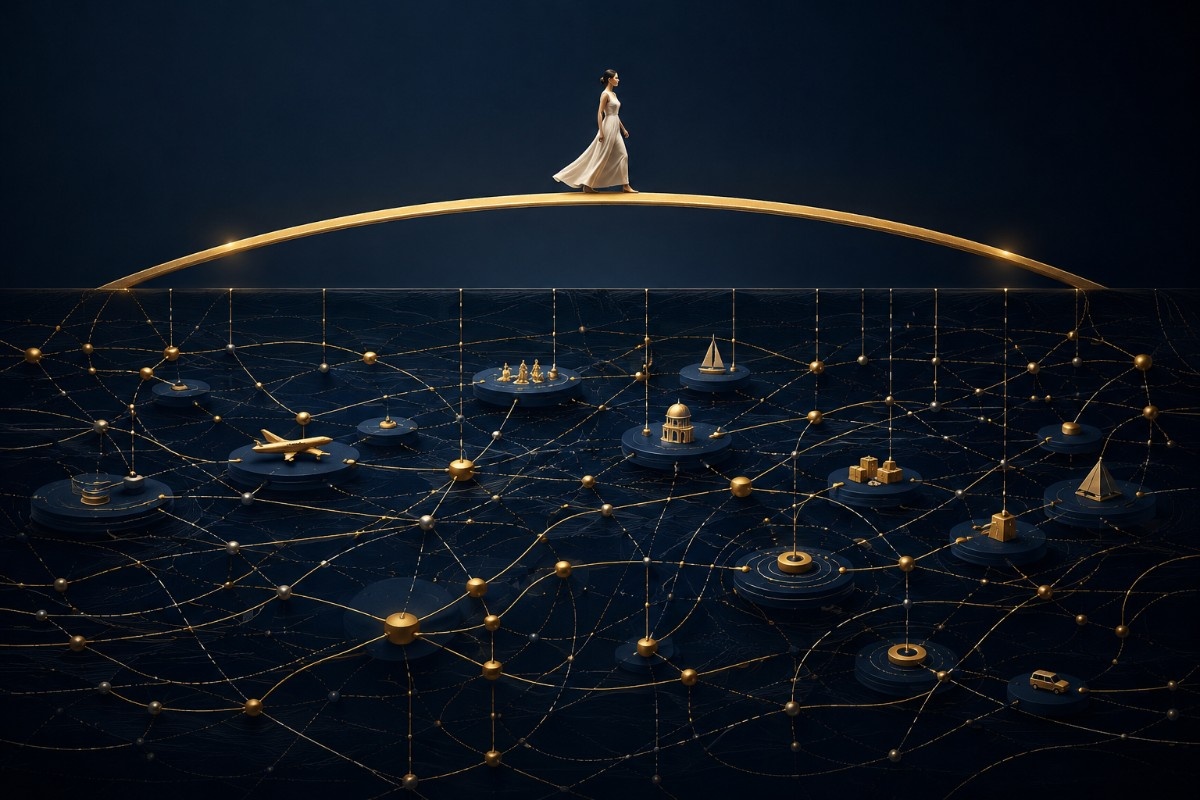
Technology will undoubtedly reshape the industry. But the competitive advantage will not belong to technology alone. It will belong to the professionals who know how to combine technology with judgment, creativity and human understanding.
Because no algorithm understands aspiration. No model builds trust. No platform takes responsibility for the experience once the traveler arrives.
Those remain profoundly human responsibilities.
This is exactly where The Key AI fits within the luxury travel world. Not as a replacement for professional expertise. But as technology designed specifically for luxury travel professionals.
Technology that removes the hours spent on research, investigation, structuring and presentation, allowing professionals to dedicate more of their time to what defines exceptional luxury service: understanding travelers, making better decisions and designing extraordinary bespoke experiences.
At the heart of The Key AI is Bespoke Experiences Studio (BES).
Every experience begins with a creative brief. From that brief, BES designs a complete bespoke experience while the professional remains in complete control — reviewing, refining, replacing recommendations, introducing preferred suppliers and shaping every detail before presenting the final proposal.
The final proposal is ready to deliver: a branded presentation for the traveler, together with a fully editable internal document containing the complete experience, narrative, budgets and margins, with the flexibility to transfer everything into the professional’s own templates and workflows.
Ready in under 30 minutes instead of one to two days.
Technology will continue to evolve. Traveler expectations will continue to evolve. The profession will continue to evolve.
The future of luxury travel will belong to the professionals who combine human expertise with technology to design experiences neither could achieve alone.
Sources
- World Travel & Tourism Council (WTTC) — Global Economic Impact Research (2026)